Neo-Animism: Seehee Chang, Serin Oh

더써드는 2026년 첫 전시로 오세린과 장세희의 2인전 《Neo-Animism》을 선보인다. 두 명의 작가는 모든 존재에 생명과 정령이 깃들어 있다고 믿었던 고대 애니미즘 세계관을 동시대 환경 안으로 호출하여 사물과 체제, 기술과 기후 속에 잠재된 생명 에너지의 흐름에 주목한다. 생명이 더 이상 자연물에만 국한되지 않는 대량생산과 복제, 인공적 환경, 디지털 흐름의 오늘날의 상황속에서 중요한 것은 무엇이 살아 있는가에 대한 규정이 아니라, 생명이 어떤 방식으로 감각되고 지속되는가에 대한 사유일 것이다.
오세린과 장세희는 생명의 서로 다른 경계면을 탐색한다. 한쪽이 소비 이후의 세계에서 발견된 응집된 생명이라면, 다른 한쪽은 탄생 이전의 세계에서 감지되는 유동적 생명이다. ‘소비구조에서 탈락된 잔재’와 ‘실재 이전의 잠재태’라는 서로 다른 언어를 사용하지만, 두 작업은 모두 생명을 인간 중심의 정의로부터 해방시키며 네오 애니미즘의 가능성을 은유한다.
오세린의 조각은 자본주의 시스템 바깥으로 밀려난 사물들에서 출발한다. 벼룩시장에 산더미처럼 쌓여 싼값에 거래되던 악세서리, 도자 산업 도시 경덕진의 공장 단지에서 검수 이후 곧바로 폐기된 도자기들, 이들은 한때 욕망의 대상이었으나 기능과 가치가 소멸된 채 남겨진 존재들이다. 작가는 이러한 잔재를 원본으로 삼아 슬립 캐스팅과 왁스 캐스팅이라는 대량생산 기법을 통해 도자와 황동으로 다시 복제한다. 그러나 이 복제는 효율이나 동일성을 담보하지 않는다. 느린 손의 노동으로 반복되는 캐스팅 작업 속에서 각각의 형상은 미묘하게 다른 표정을 지으며 마치 자연에서 채집된 수석이나 심해 광물과 같은 심상을 제공한다. 산업적 생산 방식을 빌리되, 결과는 오히려 단일한 생명체처럼 존재하는 조각이 된다.
이처럼 오세린의 작업은 소비 이후의 세계, 욕망의 무덤이라 할 수 있는 장소에서 다시금 반짝이는 생명성을 감지한다. 이는 단순히 가치를 다한 사물에 생명을 부여하는 행위가 아니라, 사물 안에 잠재되어 있던 생의 감각을 다시 드러내는 과정에 가깝다. 더불어 원본과 복제, 진품과 가품이라는 구분이 더 이상 유효하지 않은 동시대적 조건을 드러내며, 사물 역시 자본의 흐름 속에서 이동하고 변형되는 하나의 유기적 존재임을 암시한다.
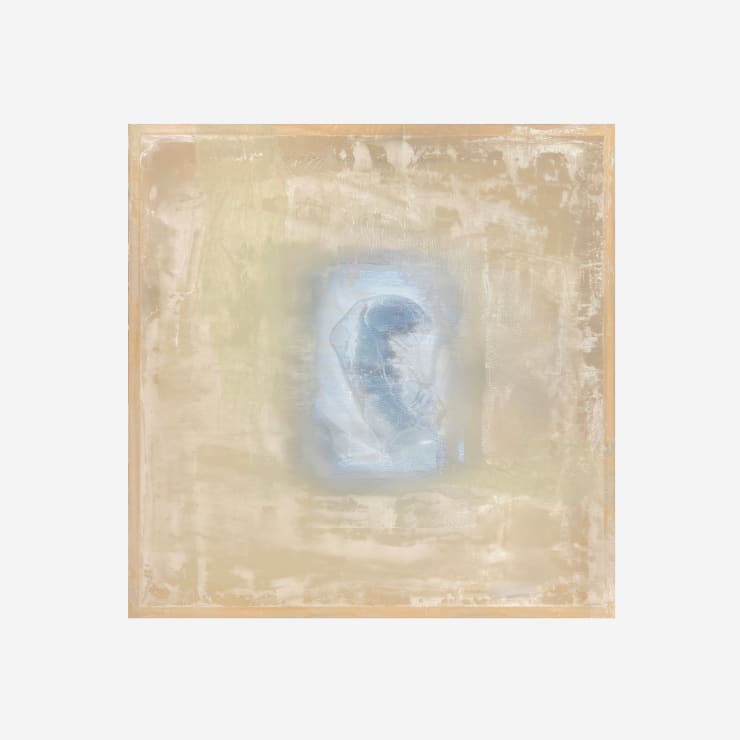
한편 장세희의 작업은 아직 태어나지 않은, 혹은 그 직전의 상태에 머무는 존재들을 포착한다. 미디어, 빛, 신체 감각을 기반으로 한 그의 작업은 자연과 기후, 기술과 인간의 내면이 교차하는 지점에서 하나의 세계관, 이른바 ‘기후의 세계’를 형성해 왔다. 이 세계에서 기후는 인간의 감각 체계를 벗어나 스스로 작동하는 구조적 시스템이다. 이번 전시에서 <숨의 막 Veil of Breath> 시리즈는 그 세계 안에 내재된 생명적 요소들을 분리하여 각각의 독립적 존재로 제시하는 시도이다.
<숨의 막 Veil of Breath>에서 관객은 마치 한 겹의 막 너머를 들여다보는 듯한 장면을 마주한다. 화면 속 존재는 마치 양수막을 연상시키는 투명한 레이어 아래서 미세하게 움직이며 호흡하듯 진동한다. 이는 특정 종으로 규정되지 않은, 새롭게 태동하는 가상의 생명체로 어떠한 서사도 목적도 기능도 갖지 않은 채, 오직 ‘태어나는 중인 상태’로 머문다. 생명의 내외부를 구분하는 얇은 막은 생명이 되기 직전의 긴장과 가능성을 감각하게 한다. 장세희는 이 막 안에 형상들을 채집하고 보존함으로써, 마치 기후가 스스로 만들어낸 유기체적 잔재 혹은 미래의 생명 화석처럼 다룬다.
오세린과 장세희가 제시하는 네오 애니미즘은 과거의 세계관을 복원하려는 시도가 아니다. 과거의 애니미즘이 자연물에 영적 의미를 부여하여 제의적 관계 맺기를 시도한 것이었다면, 동시대의 네오 애니미즘은 새롭게 등장하는 생명 감각을 폭넓게 수용하고 탐색하는 데 초점을 둔다. 전시는 우리가 살아 있다고 인식하지 않았던 것들, 아직 이름조차 부여되지 않은 존재들, 그리고 비가시적인 흐름 속에서 작동하는 모든 것들과의 대화를 시도하며, 우리의 존재론적 시야를 확장하고자 한다.
THE THIRD presents 《Neo-Animism》, a two-person exhibition by Serin Oh and Seahee Chang, as its first exhibition of 2026. The exhibition revisits ancient animistic worldviews that understood all existence as imbued with life and spirit, and reactivates them within the conditions of the contemporary environment. Through this lens, the two artists attend to the circulation of latent life energies embedded within objects, systems, technologies, and climatic structures.
In a present shaped by mass production, replication, artificial environments, and digital flows, life can no longer be confined to natural forms alone. Rather than asking what qualifies as living, Neo-Animism shifts the inquiry toward how life is sensed, mediated, and sustained. Life is approached as a perceptual and material process that persists across technological, industrial, and environmental conditions, beyond fixed or human-centered definitions.
Serin Oh and Seahee Chang explore different thresholds of life. While one engages with condensed forms of life discovered in post-consumption landscapes, the other attends to fluid states of life sensed before emergence. Although they operate through distinct conceptual languages, one addressing residues excluded from structures of consumption and the other engaging potential states preceding material reality, both practices release life from anthropocentric frameworks and gesture toward the possibility of a contemporary neo-animalistic sensibility.
Serin Oh’s sculptural practice begins with objects displaced from capitalist systems of circulation. Accessories once amassed and sold cheaply in flea markets, and ceramic wares discarded immediately after inspection in the industrial ceramic city of Jingdezhen, serve as points of departure. These objects were once commodities of desire, yet now remain as entities whose function and value have been exhausted. Oh adopts these remnants as originals and reproduces them through slip casting and wax casting processes using ceramic and brass, techniques historically associated with mass production.
This act of reproduction, however, does not pursue efficiency or uniformity. Through slow, repetitive hand casting, each form acquires subtle variations, presenting distinct presences that recall naturally collected stones or deep-sea minerals. While borrowing industrial production methods, the resulting sculptures resist standardization and instead exist as singular, life-like entities. Oh’s work locates renewed vitality within post-consumption environments, often understood as sites of abandonment. Rather than simply animating valueless objects, the practice reveals latent sensations of life already embedded within material forms. At the same time, it exposes contemporary conditions in which distinctions between original and copy, authenticity and imitation, have lost their validity, suggesting that objects themselves function as organic entities that circulate and transform within the flows of capital.
Seahee Chang, by contrast, focuses on beings that have not yet come into existence, or that remain suspended at the moment just before birth. Grounded in media, light, and embodied perception, her practice has developed a coherent worldview she calls the climate world, in which nature, climate, technology, and the human interior intersect. Within this framework, climate operates as a structural system that functions independently of human sensory perception.
<Veil of Breath>, Chang isolates and presents the life like elements embedded within this world as independent presences. Viewers encounter scenes that appear as though observed through a thin membrane. Beneath translucent layers reminiscent of amniotic membranes, forms subtly move and vibrate as if breathing. These entities remain unclassified and newly emergent, without narrative, function, or purpose, existing solely in a state of becoming. The thin membrane separating the interior and exterior evokes the tension and potential that precede life’s formation. By collecting and preserving these forms within the membrane, Chang treats them as organic residues generated by climate itself, akin to speculative fossils of future life.
The neo-animism proposed by Serin Oh and Seahee Chang does not seek to restore a past worldview. Whereas historical animism attributed spiritual meaning to natural objects through ritualized relationships, contemporary neo-animism instead attends to newly emerging modes of sensing life across material, technological, and environmental domains. The exhibition initiates dialogue with entities not previously recognized as living, with presences that remain unnamed, and with invisible processes operating beneath perceptible reality. Through this encounter, Neo-Animism seeks to expand our ontological horizon and reconsider how life continues to manifest beyond the limits of human perception.