JUNGWON PHEE: triptych
Current exhibition
Overview

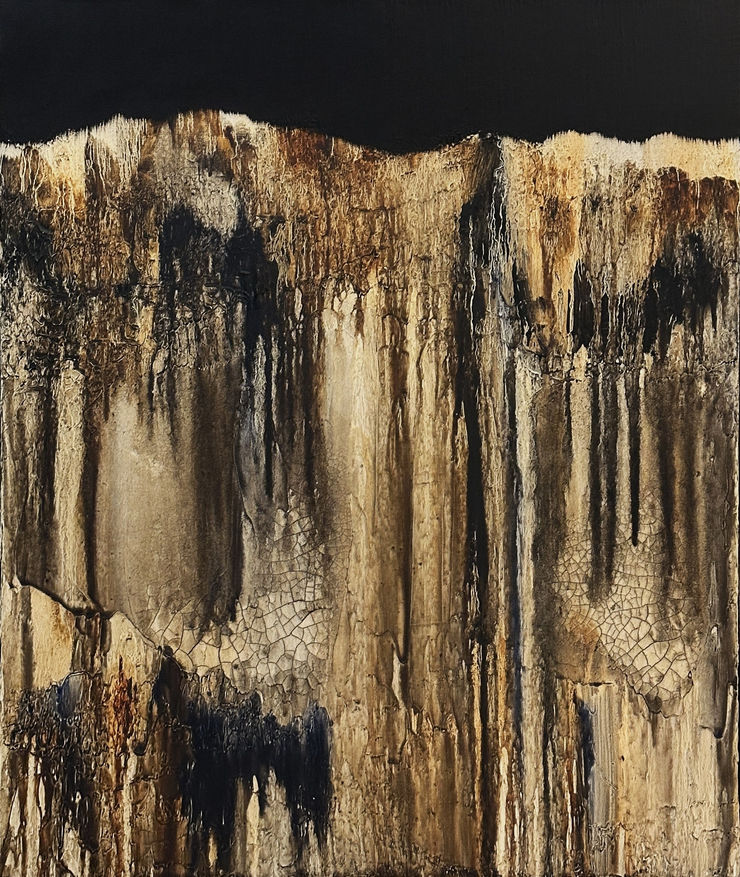
피정원의 회화는 무엇을 재현하는가보다, 회화가 무엇을 담지할 수 있는가를 묻는 데서 출발한다. 더써드는 그의 개인전 <triptych>을 통해 추상을 하나의 결과 이미지가 아니라, 사고와 감정이 형성되는 과정으로 다루는 새로운 회화적 실천을 제시한다. 피정원의 작업을 관통해 온 검정의 화면은 단순히 색채라기보다 경험과 기억, 정체성에 관한 사유가 머무는 구조적 장으로 표현되어왔다. 단단히 닫힌 것처럼 보이는 어두운 평면 위에서 안료는 갈라지고, 흐르고, 응고되며 안정된 형상을 거부한 채 물질적 긴장과 심리적 흔적을 동시에 드러낸다. 크고 작은 균열과 물감층은 작가 자신과 세계가 상호작용하는 지점이자, 새로운 의미가 발생하는 변곡점이 되어왔다. 이처럼 피정원의 화면은 대상을 재현하기보다, 감각과 기억이 재배열되는 과정을 물질의 표면으로 드러낸다. 한동안 작가는 서로 다른 시간과 장소에서 비롯된 여러 상호작용을 한 화면에 병치하고 응축하는 방식의 작업을 이어왔다. 복수의 순간이 압축된 장면은 서로 어긋난 감각의 조각들 사이에서 형성되는 정서적 공통 분모를 탐색하는 과정에 가까웠다. 사적인 감각이 중첩을 거듭할 때 보편적 정서로 확장될 수 있는가에 대한 실험이기도 했다.
한편 이번 전시에서 작가는 작업의 방향을 역으로 재생한다. 많은 순간을 한데 모으는 대신, 하나의 경험을 세 개의 화면으로 나눈 것이다. 피정원은 중세 서구 제단화에서 주로 사용된 삼면화 (三面畵, triptych) 형식을 차용하지만, 이를 상징이나 도상의 차원이 아니라 인식의 틀로 재해석한다. 하나의 경험이 인지되기 전의 상태, 그 안에 놓여 있는 상태, 그리고 지나간 이후의 잔여까지 감정이 형성되고 통과하는 시간을 분절된 화면 배열로 제시하는 것이다. 응축 대신 분할을, 동시성 대신 단계적 인식을 택한 이 구조 속에서 관객은 각각의 이미지를 해독하기보다, 감정과 인식이 전개되는 과정을 따라가게 된다. 이 경우 추상은 더 이상 하나의 압축된 인상이 아니라, 시간 속에서 직조되는 감정의 구조로 읽힌다. 그럼에도 이 형식은 미술사적 맥락과 완전히 분리되어 보이지는 않는다. 삼면화는 오랜 회화의 역사 속에서 하나의 장면을 넘어 서사와 시간, 인식의 단계를 나누어 제시하는 장치로 기능해왔다. 피정원의 삼면화 역시 특정 신앙적 의미를 호출하지는 않지만, 평면을 대하는 태도의 엄격함과 회화 형식에 대한 자의식을 드러내는 듯하다. 이러한 접근은 회화를 우상화하는 것이 아니라, 평면이라는 매체가 지닌 사유의 가능성을 신중하게 다루려는 작가의 연구적 태도로 해석된다. 화면은 표현의 결과이기 이전에 사유의 대상이며, 반복과 덧칠, 기다림의 개입을 통해 축적되는 수행적 공간이 된다. 이는 작가가 사유의 시간으로서, 표현의 공간으로서의 회화 그 자체를 얼마나 귀히 여겨왔는지 느낄 수 있는 지점이다.
전시장 구성 또한 이러한 태도를 확장한다. 절제된 배열과 깊이 있는 색의 공간, 고전 형식을 환기하는 프레임 장치는 종교적 상징을 재현하기 위한 연출이 아니라, 회화를 다시 응시의 중심으로 돌려놓기 위한 장치로 읽힌다. 관객의 이목을 집중시키고, 시선의 이동 속도를 자연스럽게 늦추며, 화면 앞에 보다 오래 머무르게 하기 위함이다. 이는 마치 추상 회화를 동시대적 실험의 영역에만 머무르게 하지 않고, 여전히 탐구의 대상으로 다루려는 형식적 제안에 가깝다. 전시는 하나의 답을 제기하기보다, 해석이 발생하는 여러 조건을 마련하는 자리이다. 피정원은 이번 전시에서 개인적 경험의 추상이 어떻게 공유 가능한 감각으로 확장될 수 있는지에 대해 세 가지 시제를 가로지르는 회화적 질문을 던진다. 분할된 화면 사이의 간격은 사유의 여지를 남기고, 작품은 완결된 메시지 대 신 관객의 감각과 기억이 개입할 수 있는 열린 구조로 놓여 계속해서 갱신될 해석을 향해 열려 있다.
Jungwon Phee’s paintings begin not with the question of what to represent, but with what painting itself can hold. Through <triptych>, abstraction is approached not as a finished visual result but as a process in which thought and emotion gradually take form. The black surfaces that have long defined the artist’s practice function less as a color choice than as a structural field where experience, memory, and identity accumulate and remain suspended. Across these dense planes, pigment cracks, flows, and settles, resisting fixed imagery while revealing both material tension and psychological trace. Layers of paint and subtle ruptures mark points where the artist and the world encounter one another, moments in which meaning arises through instability rather than resolution. Instead of depicting external subjects, the work makes visible the ongoing reorganization of sensation and memory through material presence. Earlier works brought together multiple encounters from different times and places within a single pictorial field. These compressed surfaces searched for emotional correspondences among disparate fragments of perception, asking whether personal experience, when layered and accumulated, might expand into a shared affect.
In <triptych>, this approach turns in the opposite direction. Rather than condensing many moments into one surface, a single experience unfolds across three panels. Borrowing the triptych format historically associated with Western altarpieces, the artist employs it not as iconography but as a framework for perception. Each panel suggests a different temporal state: the moment before recognition, the condition of immersion, and the lingering residue that remains afterward. Division replaces compression, and sequential experience takes the place of simultaneity. The viewer is invited not to decode images but to follow the gradual formation of perception and feeling. Abstraction appears here as a temporal structure of emotion rather than an instantaneous visual impression. Although detached from devotional meaning, the format inevitably recalls its art-historical role as a device for organizing narrative, time, and stages of awareness. This reference does not restore symbolic authority; instead, it reflects a heightened awareness of painting as a medium with its own conditions and limits. The surface becomes less a site of expression than a space of sustained attention, shaped through repetition, layering, and duration. Painting operates here both as material practice and as a space in which thought unfolds over time.
The exhibition design extends this attitude. A restrained installation, a deep chromatic atmosphere, and framing devices that quietly echo historical display are not intended as symbolic gestures. Rather, they draw attention back to the act of looking. The spatial arrangement slows the viewer’s movement, encouraging longer engagement and resisting the accelerated pace of contemporary image consumption. Rather than offering a single conclusion, triptych creates the conditions for interpretation to emerge. Moving across three temporal registers, the exhibition asks how the abstraction of individual experience might become perceptible as a shared sensibility. The intervals between panels remain intentionally open, allowing the viewer’s perception and memory to enter the work. Meaning is not fixed but continues to shift, sustained through the ongoing act of looking.
Installation Views


Works